
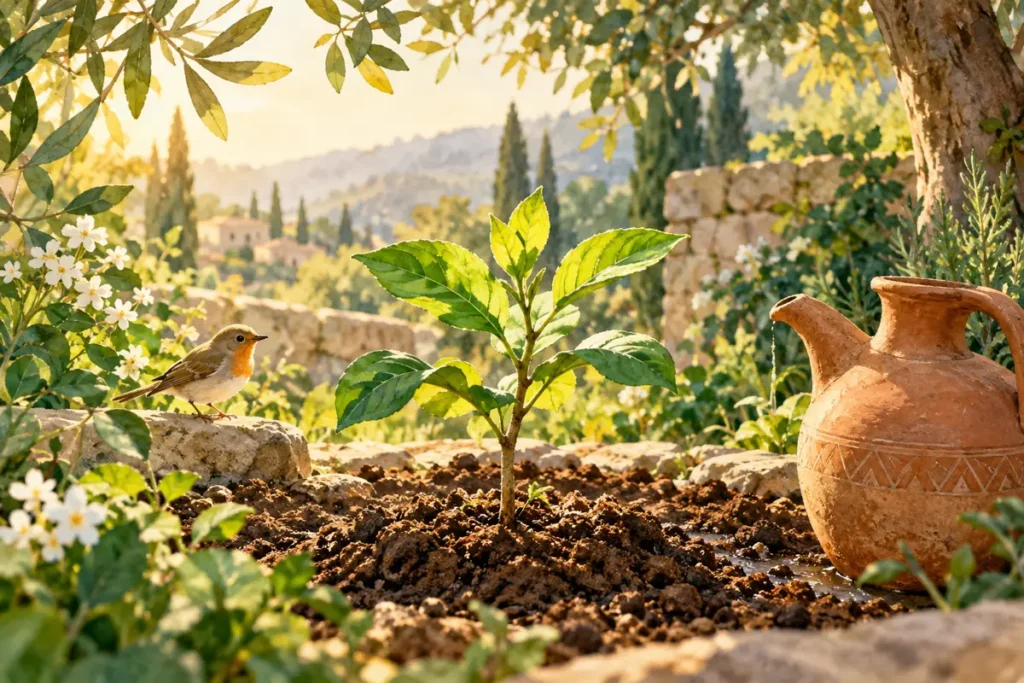
Care is easiest to notice when it becomes useful to someone else. A tree can provide food or shade without asking who will benefit next.
Sahih al-Bukhari 2320 describes planting that feeds people, birds or animals as charity. It gives this reflection a practical starting point: small acts can have benefits beyond the person who begins them.
Start with the place you have
You do not need to manage a famous heritage site to care for a living thing. A courtyard, a shared lane or an appropriate planting area may offer a modest opportunity. Seek local advice about suitable plants and permissions before planting in public space.
The generous act includes maintenance. Water, space and protection matter after the first photograph has been taken. An action that looks small at the beginning may require steady attention.
Think beyond a single moment
Patience changes the way we judge our efforts. Not every worthwhile action produces an immediate visible result. Supporting an existing tree, avoiding litter and helping another person maintain a garden can all be useful even when they make little noise.
Care for stories too
There is a parallel in educational work. An accurate explanation may quietly help a reader long after it is published. Keeping references available and correcting errors are forms of maintenance for knowledge.
This comparison is an editorial reflection. It does not imply a guaranteed reward for a website contribution or equate every publishing activity with the specific teaching in the hadith.
A simple next step
Look for one lasting, manageable act of care. Ask what is needed, commit only to what you can maintain, and let usefulness matter more than appearance.
Read the source: Sahih al-Bukhari 2320.