
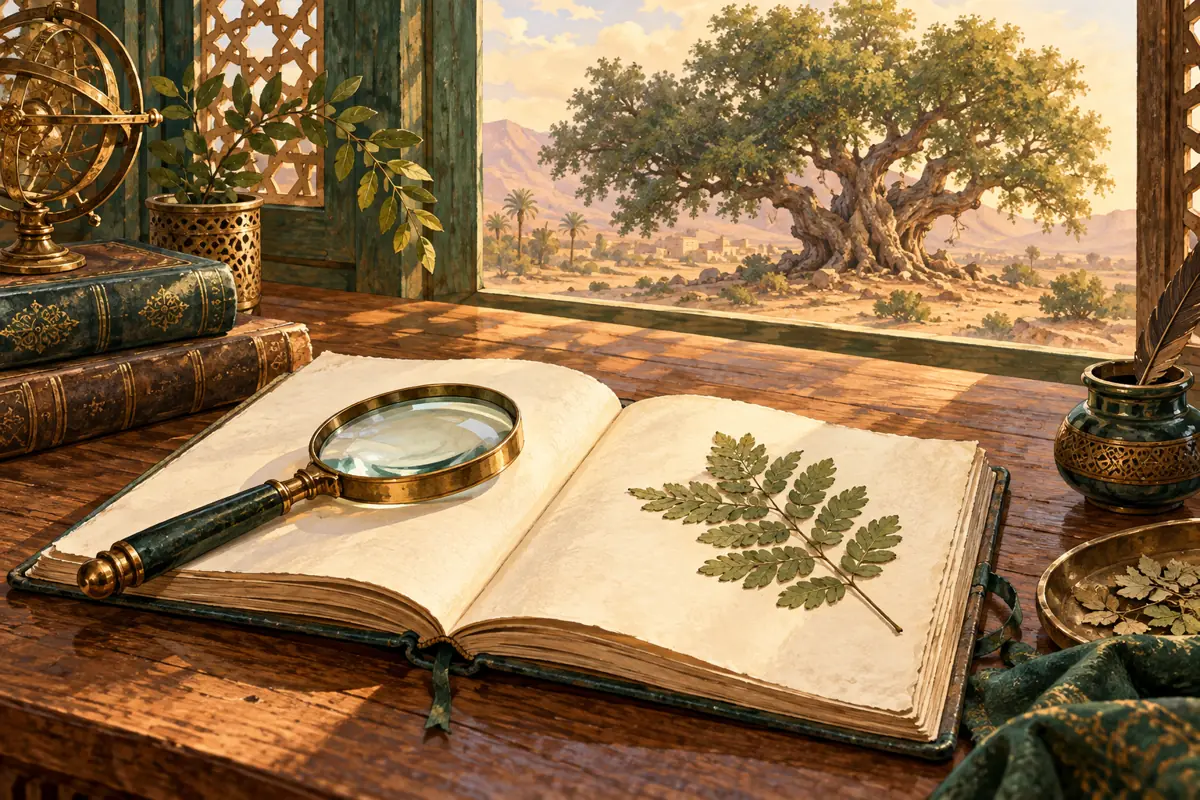
Some stories arrive before their sources do. We see a photograph, hear a memorable sentence, and feel that we already understand the place. Reading more carefully can deepen that first interest.
Begin with one precise question
Instead of asking whether “the whole story” is true, separate it into smaller questions. Where is the place? Who describes it? What event is being claimed? Is a date an estimate? Does a religious text name the location, or is that identification made later?
These questions are not a test of a reader’s devotion. They are tools for understanding what is actually being said. A respectful reader can value a tradition while being honest about the limits of the evidence.
Follow the source, not the headline
A photograph may show a tree without proving its age. A visitor centre can demonstrate modern public interest without resolving the details of an early account. A narration can be important to the discussion without establishing the identity of a surviving tree.
When you open a reference, read the surrounding passage. Notice the author, date and purpose. A tourism guide introduces a destination; a religious collection preserves transmitted reports. Their roles differ.
Make space for uncertainty
Words such as “traditionally associated with” and “estimated” are useful. Removing them can make a sentence shorter while making the claim stronger than its source allows. Keeping them is a form of care for the reader.
A small reading habit
Write three lines after reading an article: what the source says, what remains uncertain, and what you personally take from it. That habit separates evidence from reflection without forcing either out of the conversation.
Begin with our history page and source policy. Let the links be an invitation to continue learning.